 ImplantGuide
Every condition explained.
Every treatment step mapped.
No jargon.
A complete reference library for adults considering dental implants — written the way a good clinician explains things: unhurried, honest, and specific to your situation.
Find your situation. Read the whole story.
Each condition below unfolds in clinical phases — the same sequence your clinician would walk you through in a first consultation. Nothing is simplified to the point of being misleading.
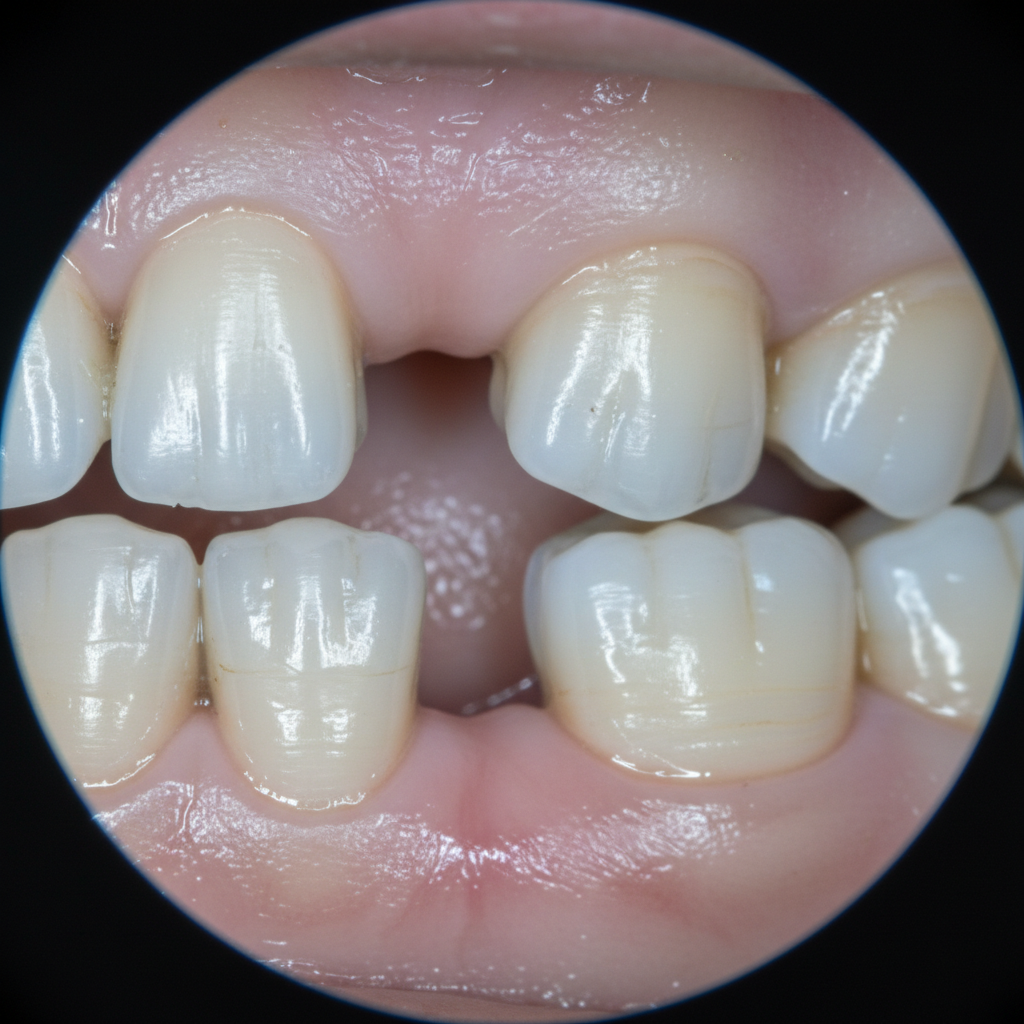
Single Missing Tooth
One implant, one crown — the most predictable outcome in implant dentistry.
68% of adults 35–44 have lost at least one tooth
Get the complete Single Missing Tooth guide — includes questions to ask your clinician.
Download Condition GuideDiagnosis & Imaging
Day 1Cone-beam CT scan maps bone volume, density, and proximity to nerves. No guesswork.
- 3D CBCT scan (90 seconds)
- Bone height & width measured to 0.1mm
- Sinus and nerve mapping
- Treatment plan presented same visit
Site Preparation
Week 1–2If bone is adequate — and for single teeth it usually is — preparation is minimal.
- Local anesthetic only, no general sedation required
- Extraction socket assessed for immediate placement
- Temporary crown fitted same day in most cases
Implant Placement
45–60 minutesA titanium post (3–4mm diameter) is placed precisely into the prepared socket.
- Surgical guide ensures ±0.3mm accuracy
- Sutures dissolve in 7–10 days
- Soft foods for 2 weeks
- No visible gap — temporary crown in place
Osseointegration
8–16 weeksBone cells grow directly onto the titanium surface. This is not healing — it is fusion.
- No action required from you
- Bone contact reaches ~70% at 8 weeks
- Stability tested with torque measurement before proceeding
- Most patients forget they had surgery by week 3
Final Restoration
Day 1 of week 12+The permanent crown is matched to adjacent teeth in shade, shape, and bite.
- Digital impressions — no trays or putty
- Crown fabricated in 2–5 days
- Final seating appointment: 30 minutes
- Biting force equivalent to natural tooth within 6 months
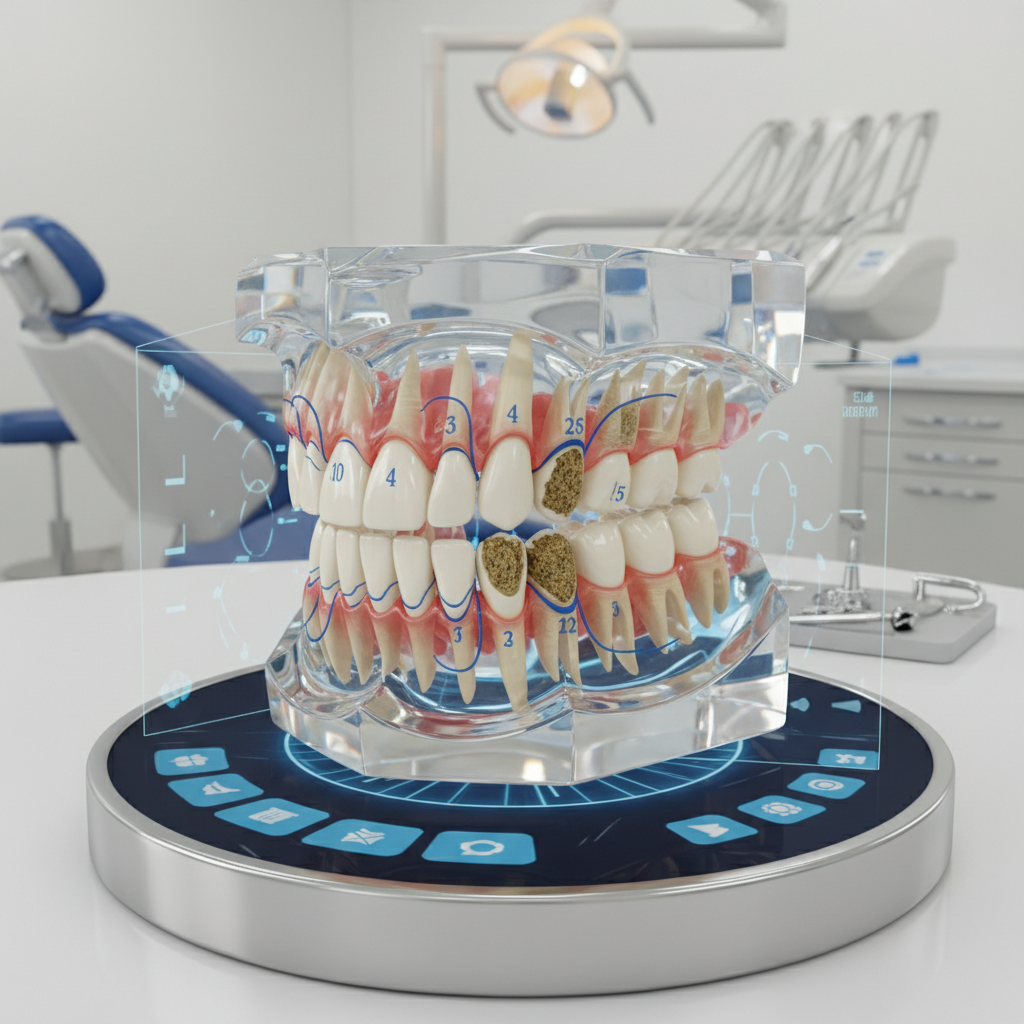
Multiple Missing Teeth
Adjacent gaps, scattered losses, or an entire quadrant — bridges supported by implants, not your remaining teeth.
1 in 4 adults over 45 has three or more missing teeth
Get the complete Multiple Missing Teeth guide — includes questions to ask your clinician.
Download Condition GuideGap Mapping & Planning
Day 1Multiple gaps require strategic placement — not every gap needs its own implant.
- Full-arch CBCT scan
- Digital smile design shows end result before treatment starts
- Implant count optimized: 2 implants can support a 3-unit bridge
- Sequential vs. staged treatment options presented
Bone Assessment
Week 1Longer gaps often have bone loss from disuse. Minor grafting may be needed.
- Bone density classified (D1–D4 scale)
- Minor socket grafts added during extraction if needed
- No separate surgery in most cases
- Adds 6–8 weeks if grafting required
Staged Placement
2–4 hours totalImplants placed in the same surgical session where possible, reducing overall treatment time.
- Conscious sedation option available
- Temporary bridge fitted before you leave
- Adjacent natural teeth not touched
- Healing cap protocol maintains tissue contour
Bridge Fabrication
After osseointegrationThe implant-supported bridge is engineered to distribute bite force evenly across all abutments.
- Zirconia or PFM bridge options
- Shade matched to remaining teeth
- Independent of adjacent natural teeth — no grinding required
- Flossing between bridge and gum maintained with a floss threader
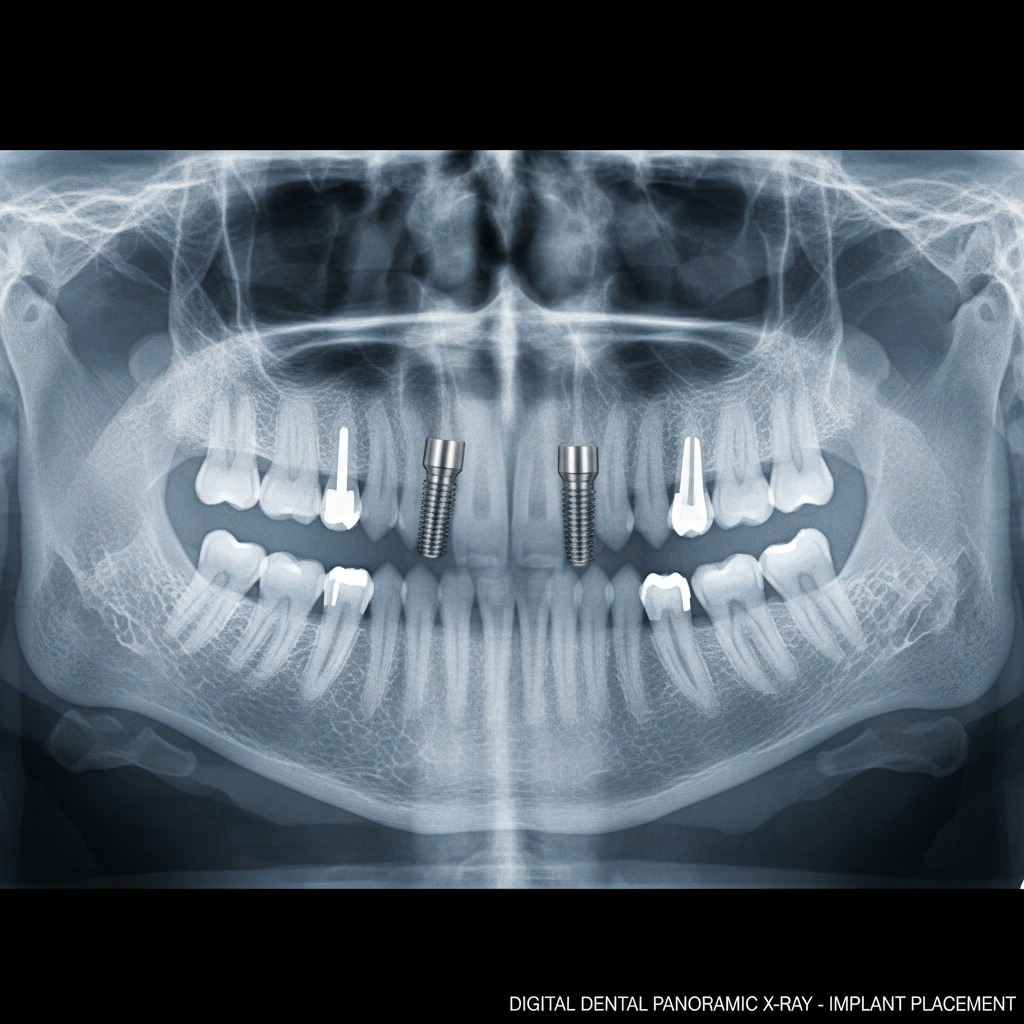
Full-Arch Loss (All-on-4 / All-on-6)
A complete fixed arch on four to six implants. Dentures that do not come out.
23 million Americans are completely edentulous in at least one arch
Get the complete Full-Arch Loss (All-on-4 / All-on-6) guide — includes questions to ask your clinician.
Download Condition GuideFull-Arch Evaluation
Day 1Existing bone in the front of the jaw is almost always sufficient — the front preserves longest.
- Full-arch CBCT with bone volume mapping
- Angled posterior implants bypass sinus and nerve
- All-on-4 vs. All-on-6 decision explained with your scan
- Existing denture used to plan final tooth position
Same-Day Surgery & Teeth
4–6 hoursExtractions, implant placement, and a fixed provisional arch — all in one appointment.
- IV sedation standard for full-arch
- Wake up with fixed teeth
- Provisional arch is acrylic — strong enough to eat soft foods
- You leave with 12 teeth that do not come out
Soft Diet Phase
3–6 monthsThe provisional arch protects the implants while osseointegration occurs.
- Soft foods only: fish, pasta, cooked vegetables
- No biting into hard crusts or raw carrots
- Weekly check-ins for the first month
- Most patients report this phase is easier than expected
Final Arch Delivery
Month 4–6The definitive zirconia arch is milled from your digital records — precise, permanent, beautiful.
- Full-contour zirconia: no chipping, no porcelain fracture
- Gum-colored base conceals any residual bone loss
- Screw-retained: removable by clinician for maintenance
- Cleaning: twice daily brushing + water flosser
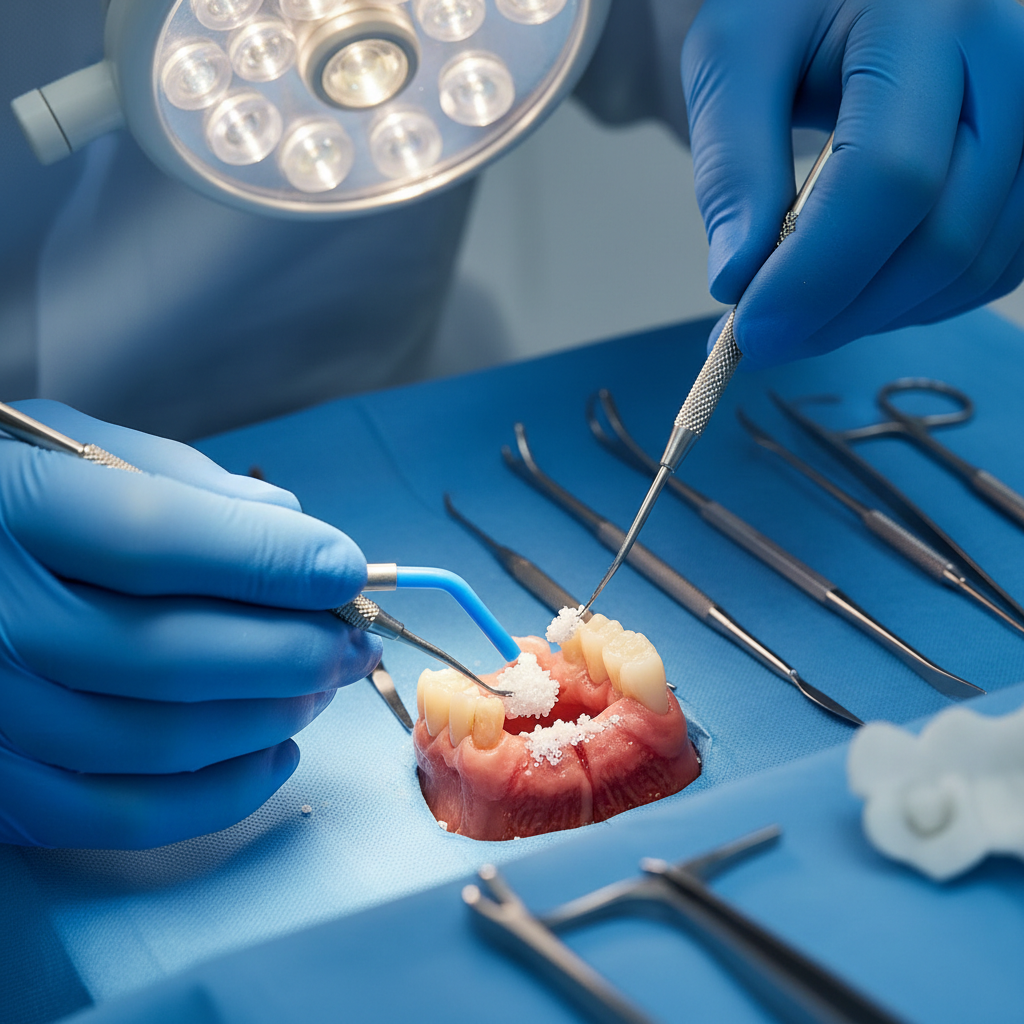
Bone Deficiency & Grafting
You have been told you do not have enough bone. This is usually solvable.
40% of implant candidates require some form of bone augmentation
Get the complete Bone Deficiency & Grafting guide — includes questions to ask your clinician.
Download Condition GuideBone Volume Classification
Day 1Not all bone deficiency is the same. Width, height, and location determine the approach.
- CBCT quantifies bone in cubic millimeters
- Horizontal loss (width): most common, most treatable
- Vertical loss (height): more complex, longer timeline
- Sinus lift indicated when upper back bone < 8mm height
Graft Material Selection
Pre-surgery consultationFour materials, each with different resorption rates and integration profiles.
- Autograft (your own bone): gold standard, from chin or hip
- Allograft (donor bone): processed, sterilized, widely used
- Xenograft (bovine): slow resorption, predictable volume maintenance
- Synthetic: no donor required, consistent quality
Augmentation Surgery
1–3 hoursGraft material is placed and held with a membrane. Your body does the rest.
- GBR membrane prevents soft tissue invasion
- Titanium mesh for large vertical defects
- Simultaneous implant placement if bone is marginally adequate
- Separate staged approach if bone is severely deficient
Maturation Period
4–9 monthsNew bone formation is measurable at 4 months. Full density at 9 months.
- CBCT at month 4 confirms new bone volume
- No implant loading during this period
- Temporary prosthetic options available throughout
- Re-entry surgery: 30 minutes to confirm and place implant
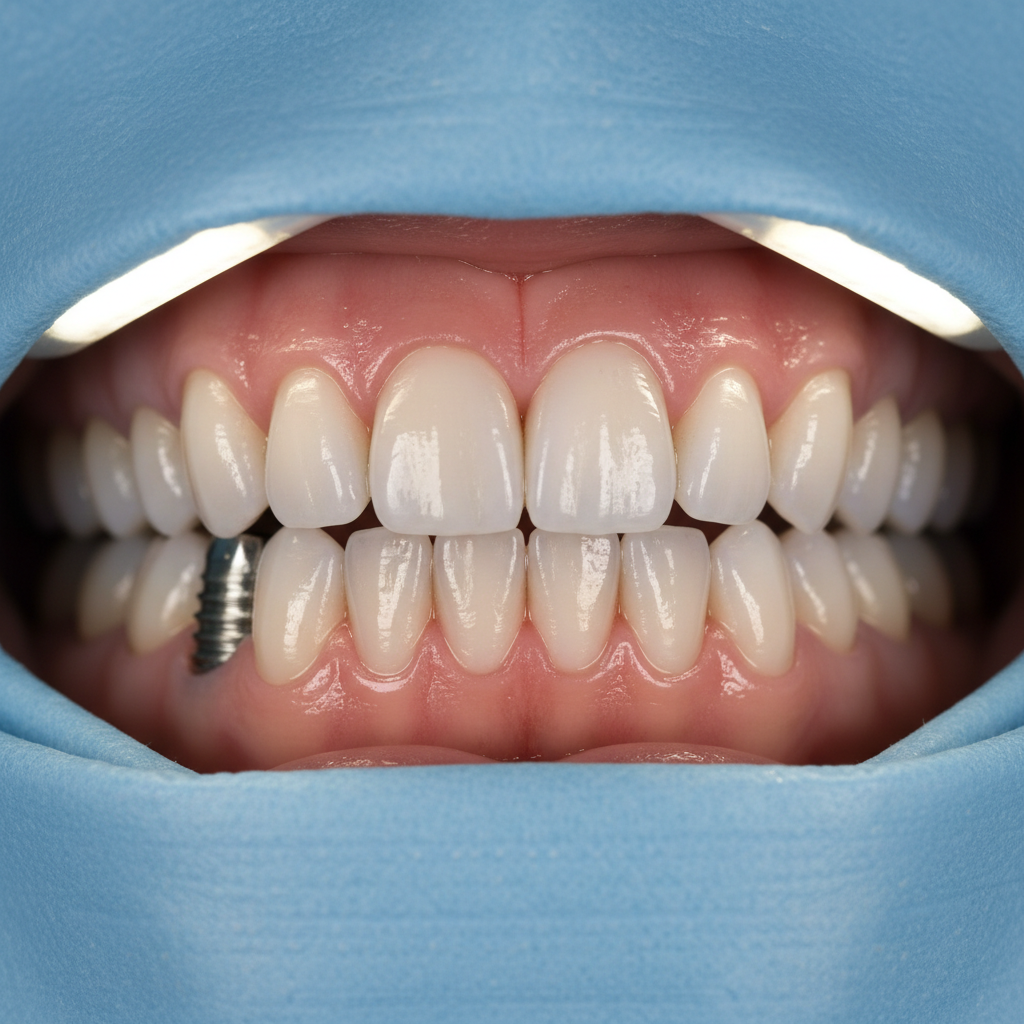
Failing Bridge or Loose Denture
Replacing a bridge that has failed, or converting a denture to a fixed solution.
Average lifespan of a dental bridge: 10–15 years
Get the complete Failing Bridge or Loose Denture guide — includes questions to ask your clinician.
Download Condition GuideBridge Failure Assessment
Day 1Understanding why the bridge failed determines whether the abutment teeth can be saved.
- Abutment tooth vitality testing
- Bone loss mapped under the pontic (gap area)
- Decay under crowns: common cause of bridge failure
- Decision: save abutments or extract and implant
Transition Planning
Week 1You will not go without teeth at any point. Transition prosthetics are planned before removal.
- Flipper or Essix retainer fabricated in advance
- Temporary bridge on remaining teeth if possible
- Immediate implants placed at extraction sites where bone permits
- Timeline mapped: you know every date before you start
Extraction & Implant Placement
1–2 hoursAtraumatic extraction preserves the socket walls for immediate or early implant placement.
- Piezoelectric extraction: preserves bone, reduces trauma
- Socket graft placed if immediate implant not possible
- Immediate provisional crown in most anterior cases
- Posterior sites: healing cap, no visible gap
Final Restoration
Month 3–5Each implant receives its own crown — no neighboring teeth involved, no shared risk.
- Independent crowns: if one fails, others are unaffected
- Bite adjustment at delivery: 15-minute fine-tuning
- Annual check-in replaces the old 5-year bridge replacement cycle
- Expected longevity: 25+ years with normal hygiene
Implants vs. bridges vs. dentures
No option is universally right. But the decision should be made with accurate numbers — not the ones that make one option look better than it is.
The 10-year cost reversal
Implants cost more on day one. By year 10, when a bridge typically needs replacement, the total cost is comparable — and by year 20, implants are significantly cheaper.
Bone loss is invisible until it isn't
Every day a tooth root is absent, the surrounding bone resorbs. A bridge preserves the crown space but not the bone beneath. Implants are the only replacement that preserves bone.
Data sourced from ADA clinical outcome studies and peer-reviewed implant literature, 2012–2024.
What happens, and when.
The most common fear is the unknown. Below is the complete sequence, with realistic timeframes derived from 12 years of outcome data — not the optimistic projections in brochures.
CBCT scan, bone assessment, and treatment plan. You leave knowing exactly what will happen and when.
Extractions, socket grafts, or bone augmentation if needed. Most patients require none of this.
Titanium posts placed with surgical guide precision. You leave with temporaries in place.
Bone fuses to titanium. You do nothing. This is biology, not medicine — it happens without intervention.
Permanent crowns or arch delivered. Shade, shape, and bite fine-tuned in a 30-minute appointment.
Annual check-in replaces the old 5-year bridge replacement cycle. Normal hygiene. Normal life.
Total treatment time: 3–6 months for a standard single implant. 4–12 months when bone grafting is required. Full-arch cases: 4–8 months from first appointment to final delivery. These are realistic ranges, not best-case projections.
Download your condition-specific guide.
A 12–20 page PDF for your specific situation — including questions to ask your clinician, a glossary of terms you'll encounter, and a realistic cost range by condition.
- Clinical phase breakdown for your condition
- Questions to ask at your first consultation
- Realistic timeline and cost ranges
- Red flags to watch for in any practice
The questions patients ask at midnight.
Answered the way a clinician answers them in person — directly, without evasion, without trying to close a sale.
Still have questions?
Free imaging consultations available
A conversation, not a commitment.
The free imaging consultation includes a CBCT scan, a bone volume assessment, and a written treatment plan. You leave knowing exactly what you need, what it costs, and whether we are the right fit.